Tracing How Asynchronous Platform Features Reshape Decision Timelines for Players Shifting Between Hold'em Cash Tables and Omaha Tournament Structures
Otto Peters · Oct 22, 2026
Tracing How Asynchronous Platform Features Reshape Decision Timelines for Players Shifting Between Hold'em Cash Tables and Omaha Tournament Structures
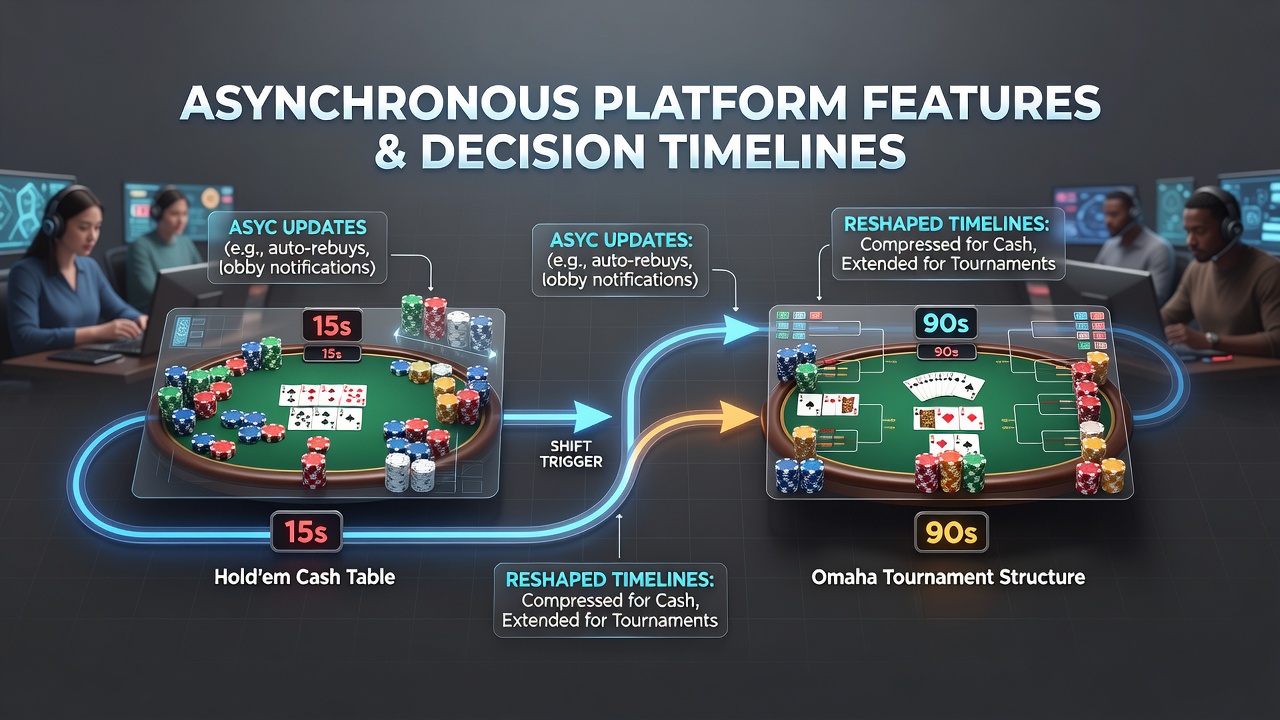
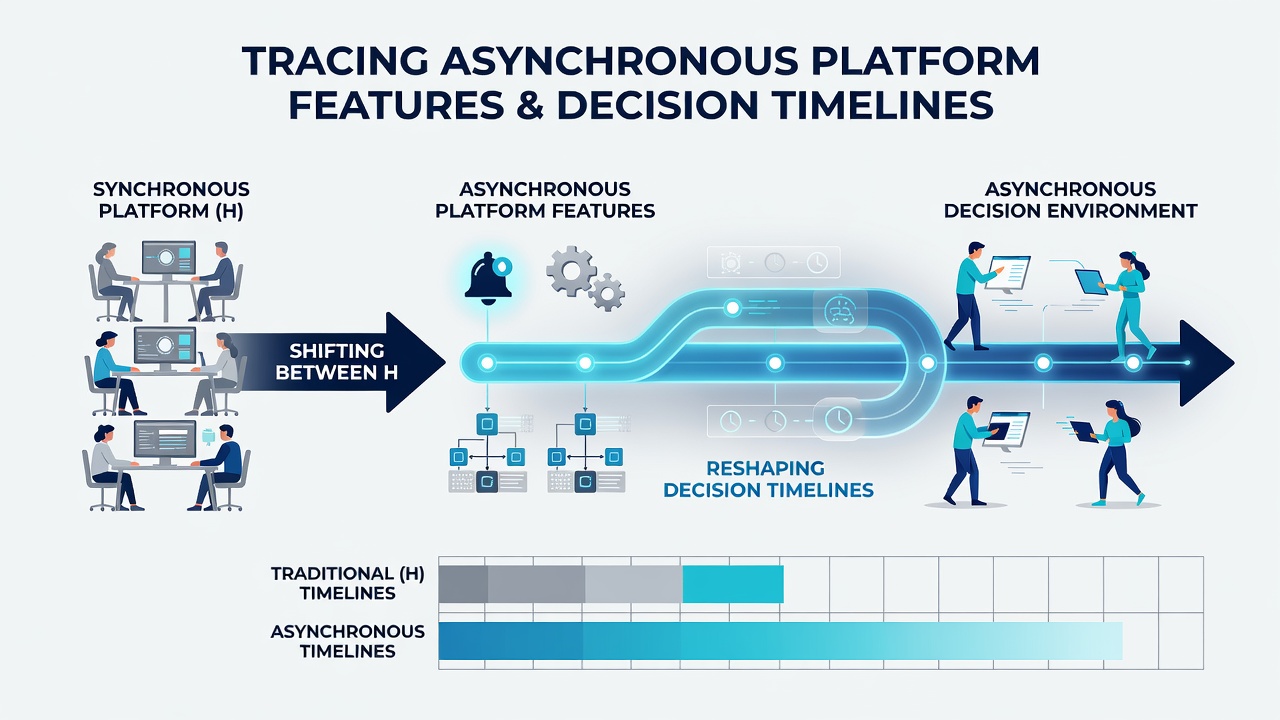
Platform developers have integrated asynchronous tools into digital poker environments, and these features alter how participants allocate seconds and minutes when moving from one format to another. Cash tables in Hold'em run on continuous action with short decision windows, yet Omaha tournament rounds introduce multi-card combinations and side-pot calculations that stretch cognitive load. Observers note that time-bank systems, auto-fold triggers, and delayed-action queues let players pause without losing seats, which compresses or expands the interval between betting rounds depending on the variant in play.
Core Asynchronous Mechanisms in Digital Poker Settings
Modern platforms deploy time-bank credits that accumulate across sessions, and these credits reset at the start of each hand or level according to operator rules. Data from platform logs shows players in Hold'em cash games expend an average of 12 to 18 seconds per decision when facing standard pre-flop raises, while the same individuals shift to 25 to 35 seconds once they enter Omaha tournament structures where four-card starting hands require combinatorial evaluation. Features such as hover-to-reveal equity calculators and stack-to-pot ratio overlays appear only after a player commits to a decision timer, which changes the pace at which information becomes visible.
Multi-tabling interfaces allow simultaneous participation across separate windows, and asynchronous queues hold actions until the player returns focus. Research from the European Gaming and Betting Association indicates that October 2026 updates to several licensed operators increased the maximum number of concurrent tables from eight to twelve for verified accounts, directly affecting how quickly participants must finalize choices when toggling between Hold'em cash and Omaha events.
Decision Timeline Shifts During Format Transitions
Players who begin sessions at Hold'em cash tables often carry muscle memory for rapid pre-flop folds, yet Omaha tournament rules force reconsideration of drawing odds because each additional card multiplies possible combinations. Asynchronous platforms insert mandatory confirmation dialogs when a player switches variants mid-session, and these dialogs add between three and seven seconds to the first decision in the new format. Figures released by the Malta Gaming Authority reveal that average hand duration in mixed-format rooms rose 14 percent during the third quarter of 2026 after operators enabled cross-variant auto-time extensions.
Time-pressure indicators change color gradients based on remaining bank seconds, and this visual cue helps participants decide whether to burn a credit or act immediately. In Hold'em cash environments the gradient shifts from green to amber after 10 seconds, whereas Omaha tournament settings extend the green phase to 20 seconds to accommodate the extra variables. Those who study platform telemetry report that players who frequently migrate between the two formats develop distinct patterns: they conserve time-bank credits during cash-game stretches and expend them more freely once seated in tournament structures where elimination pressure alters risk tolerance.
Platform Data and Player Behavior Patterns
Industry reports compiled by the Australian Communications and Media Authority track session lengths across variants and show that asynchronous features reduce average session abandonment by 9 percent when players can pause without penalty. The same datasets highlight that decision latency spikes occur most often during the first three hands after a format switch, after which latency stabilizes as participants recalibrate to the new hand-strength hierarchies. Tournament structures impose escalating blind levels that interact with asynchronous timers, and operators have adjusted blind-up intervals in October 2026 to account for the added decision overhead introduced by cross-variant play.
Stack-size visualizations update asynchronously when players move chips between tables, and these updates prevent mis-clicks that previously consumed extra seconds. Observers tracking anonymous play data note that participants who maintain separate time-bank pools for cash and tournament modes exhibit lower overall latency variance than those who share a single pool across both.
Conclusion
Asynchronous platform tools continue to modify the temporal architecture of poker sessions by providing flexible decision windows that respond to variant-specific demands. Hold'em cash tables reward speed while Omaha tournament structures reward calculation depth, and the migration between them now occurs inside systems that record, extend, and redistribute time resources according to operator-defined parameters. Data collected through 2026 demonstrates measurable changes in hand-completion rates and latency distributions whenever players cross format boundaries on licensed platforms.